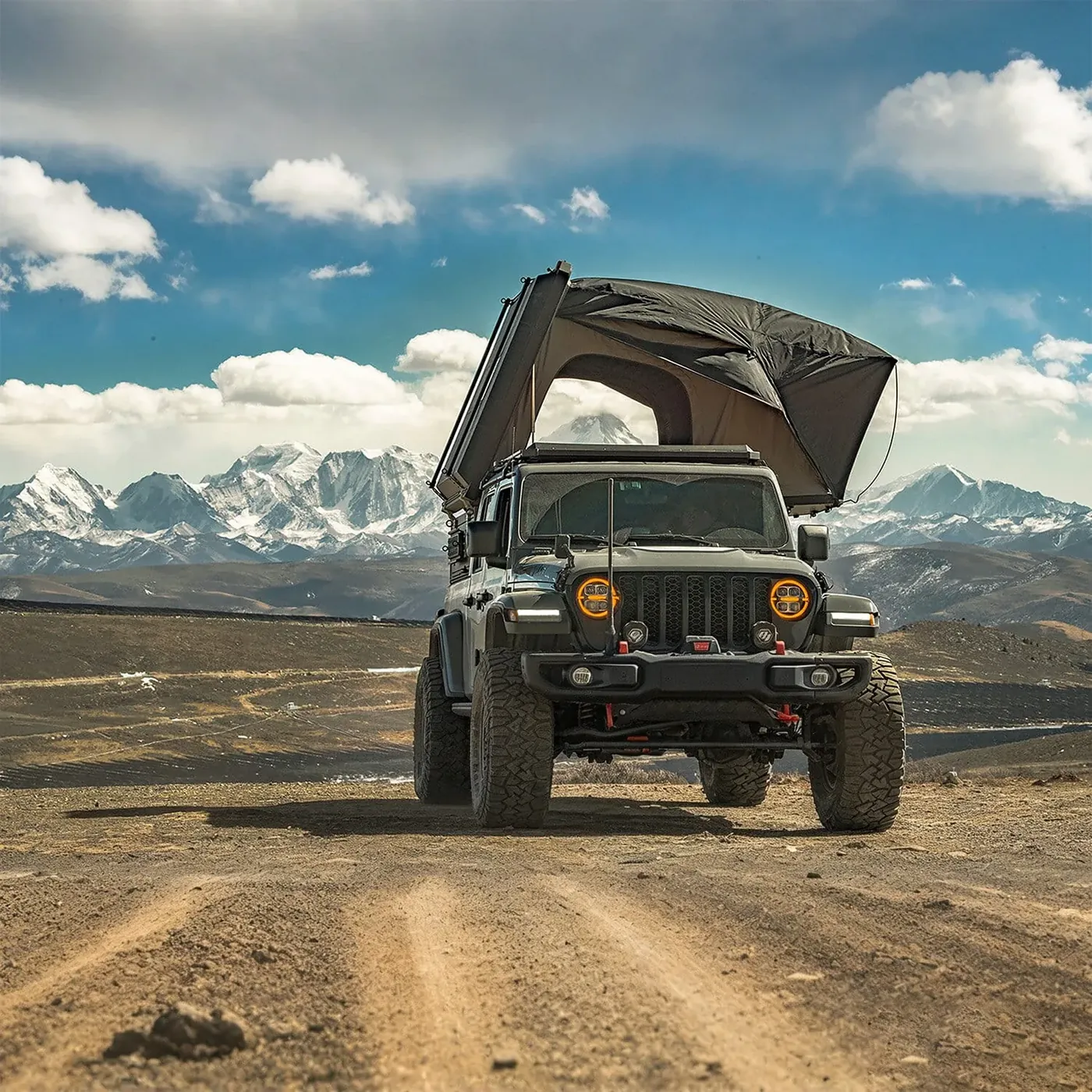
A rooftop tent is part of a vehicle system. Its size and appearance matter, but the first buying decision is whether the vehicle, mounting equipment and tent are compatible. ESSE offers several roof-tent formats alongside vehicle awnings and mounting accessories; those product categories make it especially important to check the complete installation rather than choose components separately.
Start with written compatibility information
Write down the exact vehicle model, model year, roof type and any existing roof equipment. Give those details to both the rack supplier and the tent supplier. Ask for the permitted mounting arrangement, required crossbar spacing and applicable load limits. Do not assume that a roof rail, crossbar or bracket is suitable because the mounting holes appear to line up.
Request a clear distinction between the limits that apply while driving and the conditions permitted while parked and occupied. Include the tent, rack, brackets and other roof-mounted equipment in the supplier's calculation. If a number is missing from the documentation, treat compatibility as unresolved until the responsible manufacturer confirms it.
Compare usable space, not just the shell
Closed dimensions tell you about the vehicle's travelling footprint. Open dimensions tell you about the campsite. Ask for the mattress dimensions, internal height, ladder position and the space required to open the tent completely. A design that extends beside the vehicle may require a wider pitch than you expect. A compact shell may also leave less room for bedding to remain inside.
Compare the actual sleeping arrangement with the people using it. A couple, a parent travelling with a child and a solo traveller carrying bulky equipment have different priorities. Product photographs do not establish how much room remains after pillows, sleeping bags and personal belongings are added.
Think through an ordinary travel day
Ask how the closure works, which steps require reaching across the roof and whether one person can follow the published setup procedure. Confirm the packed height of the complete vehicle and check the places you regularly use, including parking facilities and storage areas. Make sure the installation allows the tailgate and other moving parts to operate as intended.
For frequent touring, access to spare hinges, seals, covers and mounting hardware may matter more than a long list of accessories. Obtain the cleaning, drying and storage instructions before ordering. Check how the manufacturer expects wet fabric to be handled after a trip.
Before approving the order
- Obtain a drawing showing the exact mounting points and hardware.
- Confirm the tent model, mattress size and included accessories in writing.
- Ask who is responsible for installation and the final compatibility check.
- Check warranty exclusions, replacement-part availability and return arrangements.
- Request operating limits and the full user manual for the chosen model.
The stronger shortlist is the one with documented fit, an understandable setup routine and accessible support. Treat claims about waterproofing or easy setup as points to verify for the specific model, rather than a substitute for the vehicle and mounting checks.
Source record: Vivamapio editorial
Community feedback
Have experience with this product? Share a useful detail with the community.