
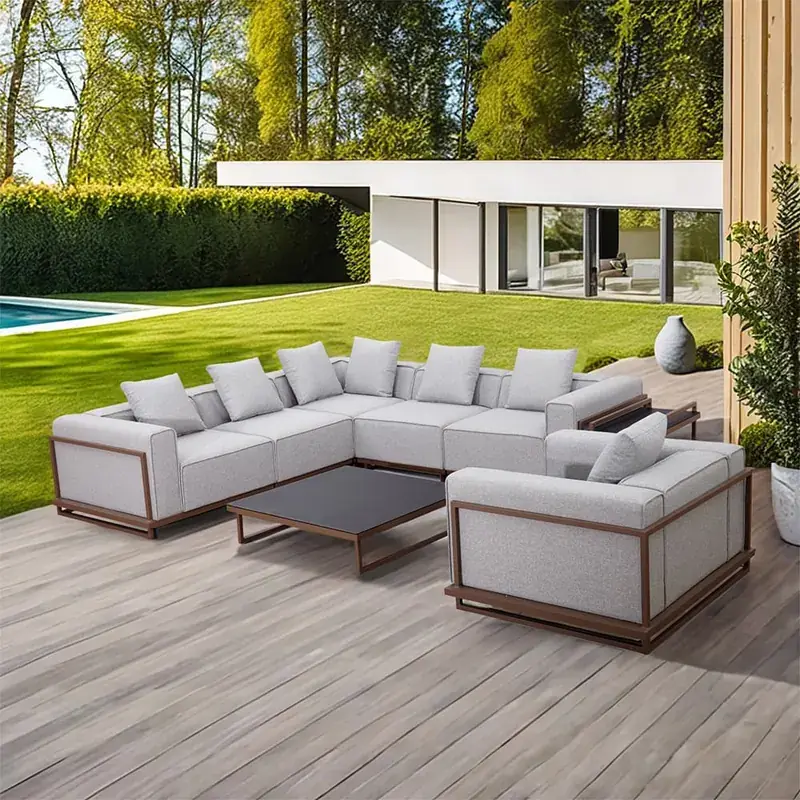
Outdoor furniture is often described with one material name, even though the finished piece combines a frame, surface treatment, woven panels, fasteners, feet and cushions. Darwin's catalogue includes aluminum, wood and woven furniture designs. These are useful starting points for a shortlist, but the material label alone cannot establish service life or suitability for your location.
Separate the frame from the surface
Ask the supplier to identify the structural frame and the visible finish separately. A woven chair may have a metal frame underneath; a wood-look table may use a different material for its top. Record the frame material, finish, fastener specification and the material used in any replaceable contact points such as feet.
For metal furniture, inspect joints and the consistency of the coating, including less visible areas underneath the piece. Ask what maintenance the manufacturer recommends if a finish is scratched. For wood, request the species, surface treatment and written care instructions. The appearance you prefer when the item is new may change with exposure and maintenance, so ask the supplier what changes to expect.
Match the construction to the setting
A sheltered residential patio, a busy restaurant terrace and an exposed poolside area present different buying requirements. Tell the supplier about exposure to sun, rain, salt air, cleaning products and frequent movement. Ask whether the exact model is intended for that use and which conditions affect its warranty.
Light furniture can be easier to rearrange, while a heavier piece may be less convenient to move or store. Neither observation establishes stability in a particular location. Request the product's placement and operating instructions, and plan appropriate storage when conditions exceed its intended use. Avoid assuming that outdoor means suitable for permanent, uncovered exposure everywhere.
Give cushions their own specification
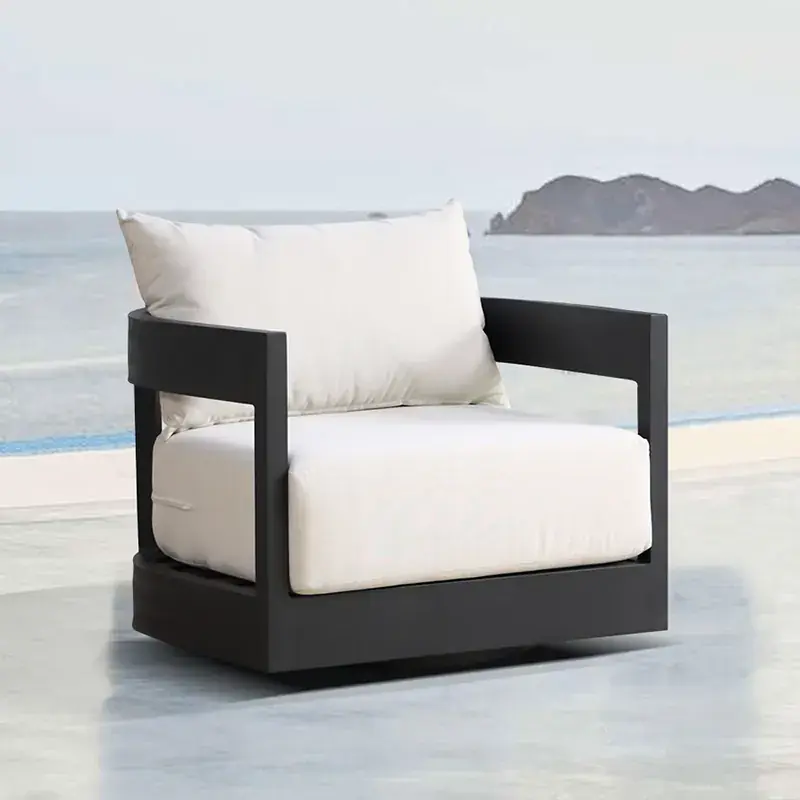
Separate the cover fabric from the filling and cushion construction. Ask whether covers are removable, how they should be cleaned, whether the filling has its own drying instructions and how replacement covers are supplied. Terms such as water-resistant and waterproof should be clarified for the finished cushion rather than interpreted from a fabric description alone.
Check seams, closures and the fit of the cushion on the actual frame. Request a sample in the planned color and finish if matching existing furniture matters. Screens and showroom lighting can make colors look different from the final outdoor setting.
Use a consistent comparison sheet
- Frame material and surface treatment for the exact model.
- Dimensions, product weight and the manufacturer's stated load limits.
- Fasteners, feet, cushion covers and other replaceable parts.
- Cleaning instructions and seasonal storage requirements.
- Warranty terms for the intended residential or commercial use.
- Packaging dimensions, assembly requirements and replacement-part lead times.
A good purchase balances appearance, practical handling and the maintenance you can realistically provide. Choose the complete specification and support arrangement that fits the site. Do not turn an attractive material description into an unsupported claim of lifetime durability, corrosion resistance or maintenance-free ownership.
Source record: Vivamapio editorial
Community feedback
Have experience with this product? Share a useful detail with the community.